
How Color Grading Software Improves Video Quality and Visual Storytelling
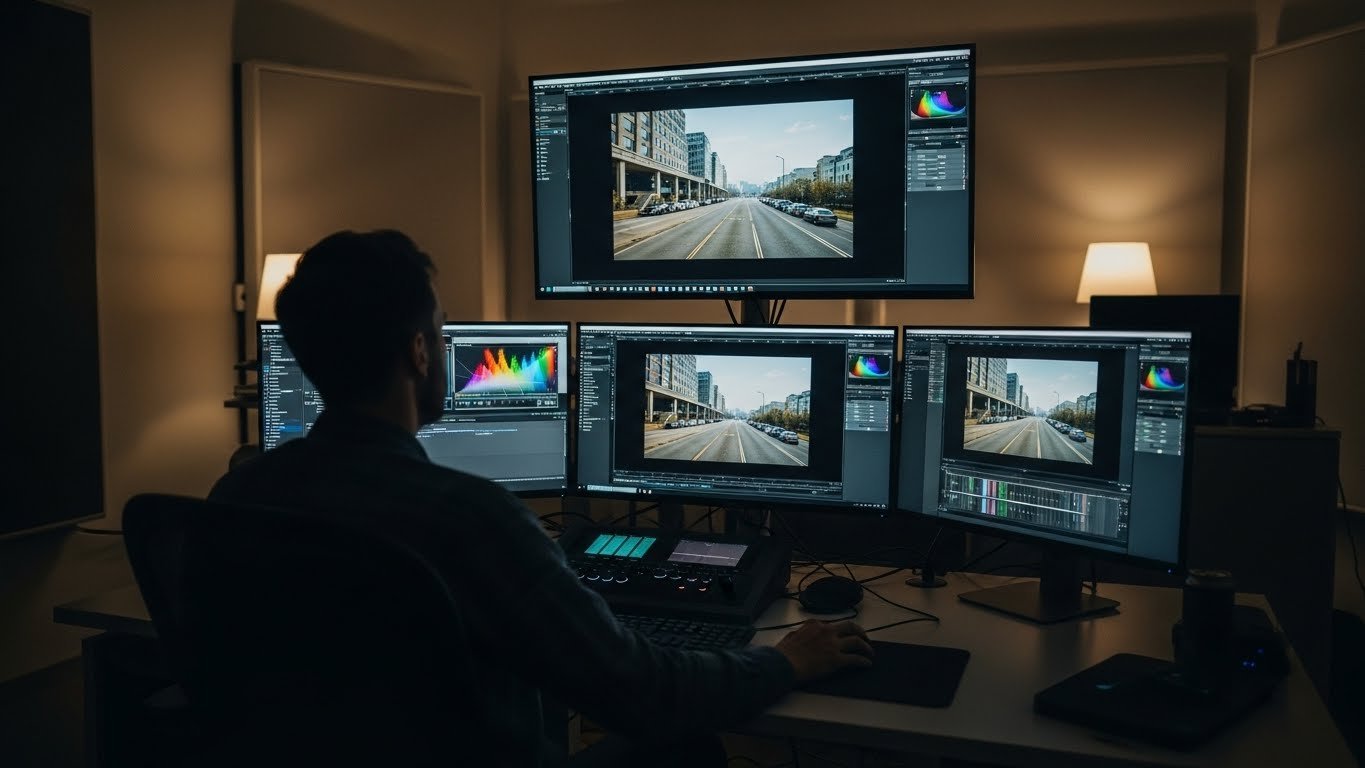
Video quality today is no longer just about shooting in high resolution. What truly separates an average video from a professional one is how it looks and feels emotionally. This is where professional video editing and color grading tools play a powerful role.. Whether you are a filmmaker, YouTuber, content creator, or marketer, color grading can completely transform your footage and elevate your visual storytelling.
Table of Contents
- What Is Color Grading and Why Does It Matter
- How Color Grading Software Improves Video Quality
- The Role of Color Grading in Visual Storytelling
- Professional vs Free Video Color Grading Software
- Choosing the Color Grading Software for Your Needs
- Key Features to Look for in Color Grading Software
- How Color Grading Software Enhances Different Types of Videos
- Common Color Grading Mistakes to Avoid
- The Future of Color Grading Software
- Frequently Asked Questions
In this article, we will explore how color grading software improves video quality, why it matters for storytelling, and how beginners and professionals can benefit from both premium and free video color grading software. Everything is explained in clear, practical terms so you can understand not just the “how,” but also the “why.”
What Is Color Grading and Why Does It Matter
Color grading is the process of adjusting and enhancing the colors in a video to create a specific look, mood, or visual style, as defined in professional film color grading principles. Unlike basic color correction, which fixes exposure and white balance issues, color grading is more creative and expressive.
With color grading software, you can:
- Enhance contrast and saturation
- Create cinematic color tones
- Unify footage shot with different cameras
- Guide viewer emotions through color
- Build a consistent visual identity
Without proper color grading, even high-quality footage can look flat, dull, or inconsistent. That’s why color grading is considered a crucial step in professional video production.
How Color Grading Software Improves Video Quality
Modern color grading software offers advanced tools similar to those found in free video editing software for beginners that dramatically improve visual clarity and polish. Let’s break down the main ways it enhances video quality.
Improves Color Accuracy and Balance
Color grading software helps correct color imbalances caused by lighting conditions or camera limitations. Skin tones become more natural, whites look clean, and blacks appear rich rather than washed out.
This correction creates a solid foundation for high-quality visuals and ensures your video looks professional across different screens and devices.
Enhances Contrast and Depth
Proper contrast makes images pop. By adjusting shadows, midtones, and highlights, color grading software adds depth and dimension to your video. This prevents the footage from looking flat and lifeless.
Well-balanced contrast also improves visual clarity, making scenes easier to watch and more engaging.
Reduces Visual Noise and Inconsistency
Some color grading tools allow subtle noise reduction and smoothing. More importantly, they help maintain visual consistency across multiple clips. This is essential when combining footage shot at different times or with different cameras.
Consistency is a key indicator of high-quality video production.
The Role of Color Grading in Visual Storytelling
Beyond technical improvements, color grading software plays a critical role in storytelling. Colors influence emotions, perception, and attention more than most people realize.
Creating Mood and Emotion
Warm tones often convey comfort, happiness, or nostalgia, while cool tones can create tension, sadness, or mystery. Color grading software allows creators to shape emotional responses intentionally.
For example, a dramatic scene may use desaturated colors and deep shadows, while a joyful moment might feature bright, vibrant tones.
Guiding Viewer Attention
Through selective color adjustments, creators can subtly guide the viewer’s eye. Brighter colors can draw attention to key subjects, while muted backgrounds reduce distractions.
This visual guidance strengthens storytelling without the audience consciously noticing it.
Establishing a Visual Identity
Consistent color grading creates a recognizable style. Many filmmakers and brands are known for their signature color palettes. With the right color grading software, you can develop a unique visual identity that sets your content apart.
Professional vs Free Video Color Grading Software
One common question is whether you need expensive tools or if free video color grading software is enough. The answer depends on your goals and experience level.
What Professional Color Grading Software Offers
Advanced color grading software typically includes:
- High-precision color wheels and curves
- Advanced masking and tracking tools
- HDR and wide color gamut support
- Non-destructive workflows
- Industry-standard export options
These tools are ideal for filmmakers, agencies, and professionals who need complete control over their visuals.
Benefits of Free Video Color Grading Software
Free video color grading software has improved significantly in recent years. Many free tools offer powerful features suitable for beginners and intermediate creators.
They are excellent for:
- Learning the basics of color grading
- Improving YouTube and social media videos
- Small projects with limited budgets
- Experimenting with creative styles
While they may lack some advanced capabilities, free tools can still deliver impressive results when used correctly.
Choosing the Color Grading Software for Your Needs
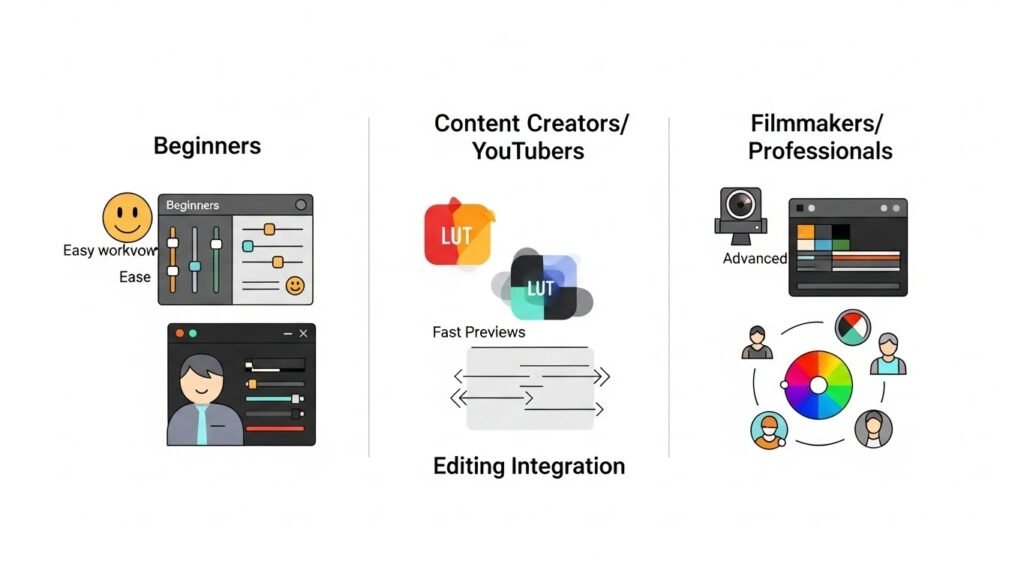
There is no single color grading software best for everyone. The right choice depends on your workflow, skill level, and creative goals.
For Beginners
Beginners should look for color grading software with a simple interface, built-in presets, and clear controls. Ease of use is more important than advanced features at this stage.
For Content Creators and YouTubers
Creators who produce regular content benefit from tools that balance power and speed, especially the video editing software used by YouTubers. Fast previews, LUT support, and seamless editing integration are key advantages.
For Filmmakers and Professionals
Professionals need precision, flexibility, and industry compatibility. Advanced scopes, color management systems, and collaboration features become essential.
Key Features to Look for in Color Grading Software
When evaluating color grading software, focus on features that directly impact quality and workflow.
- Color Wheels and Curves: For precise control over tones
- LUT Support: To apply and create consistent looks
- Scopes: For accurate color monitoring
- Masking Tools: To isolate specific areas
- Real-Time Preview: For faster creative decisions
These features ensure your color grading process is both effective and efficient.
How Color Grading Software Enhances Different Types of Videos
Color grading software benefits nearly every video genre, but the approach may differ.
Films and Short Movies
In films, color grading helps establish tone, continuity, and cinematic quality. It supports storytelling by reinforcing themes and emotions.
Marketing and Promotional Videos
Brand videos rely on consistent colors to build trust and recognition. Color grading ensures brand colors remain accurate and visually appealing.
Social Media Content
On platforms filled with competing visuals, strong color grading helps content stand out instantly and retain viewer attention.
Common Color Grading Mistakes to Avoid
Even with powerful color grading software, mistakes can reduce video quality.
- Over-saturating colors
- Ignoring natural skin tones
- Using inconsistent grading styles
- Relying too heavily on presets
Effective color grading is subtle and intentional. The goal is enhancement, not distraction.
The Future of Color Grading Software
Color grading software continues to evolve with AI-assisted tools, automatic color matching, and smarter workflows. These advancements make professional-quality grading more accessible than ever.
As technology improves, creators can focus more on storytelling while still achieving visually stunning results.
Frequently Asked Questions
What is the main purpose of color grading software?
The main purpose of color grading software is to enhance video quality and support storytelling by adjusting colors, contrast, and mood in a controlled, creative way.
Is free video color grading software good enough for beginners?
Yes, free video color grading software is often more than enough for beginners. It allows users to learn core techniques and produce high-quality videos without financial pressure.
How does color grading differ from color correction?
Color correction fixes technical issues like exposure and white balance, while color grading is a creative process that defines the visual style and emotional tone.
Can color grading software improve low-quality footage?
Color grading software can enhance the appearance of low-quality footage, but it cannot fully fix poor lighting or extreme technical flaws. Good source footage always matters.
What makes the color grading best software stand out?
The color grading best software stands out by offering precise controls, consistent results, flexible workflows, and tools that match the creator’s skill level and goals.
Color grading software is more than a finishing touch. It is a powerful creative tool that improves video quality, strengthens storytelling, and helps creators express their vision clearly. Whether you choose a premium solution or a free video color grading software, mastering color grading will elevate your videos and leave a lasting impression on your audience.