

SEO Tools Comparison Guide for Beginners: Using the Right SEO Tool
Choosing the right SEO software can feel overwhelming, especially when you are just starting out. With dozens of platforms claiming to be the “best,” most beginners struggle to understand which features actually matter. This SEO tools comparison guide is written to simplify that decision. Instead of confusing jargon or sales talk, you’ll find clear explanations, real use cases, and honest insights to help you select the right SEO tool for your needs.
Table of Contents
- What Are SEO Tools and Why Do Beginners Need Them?
- Key Features Beginners Should Look For in SEO Tools
- Types of SEO Tools Explained Simply
- SEO Tools Comparison: Popular Options for Beginners
- Free vs Paid SEO Tools: What Should Beginners Choose?
- How to Choose the Right SEO Tool for Your Needs
- Common Beginner Mistakes When Using SEO Tools
- SEO Tools Are Helpers, Not Magic Solutions
- Frequently Asked Questions (FAQ)
Whether you are a blogger, small business owner, affiliate marketer, or student learning digital marketing, this guide will help you understand how different SEO tools work and which ones are worth your time and money.
What Are SEO Tools and Why Do Beginners Need Them?
SEO tools are software platforms designed to help you improve your website’s visibility on search engines like Google. They analyze data such as keywords, backlinks, technical errors, competitors, and content performance.
For beginners, SEO tools act like a roadmap. Instead of guessing what to do, the right tool for SEO shows you:
- What people are searching for
- How competitive a keyword is
- Why your site is not ranking
- What competitors are doing better
Without these tools, SEO becomes trial and error. With them, it becomes structured, measurable, and far more effective.
Key Features Beginners Should Look For in SEO Tools
Not all SEO tools are beginner-friendly. Some are built for large agencies and can feel intimidating at first. When comparing options, beginners should focus on usability and core features rather than advanced technical functions.
1. Easy-to-Understand Dashboard
A clean interface makes a huge difference. The best SEO tools for beginners explain data visually using charts, scores, and clear labels rather than raw numbers.
2. Keyword Research Capability
Keyword research is the foundation of SEO, and using a dedicated SEO content writing tool helps beginners identify the right keywords faster and with better clarity
- Search volume
- Keyword difficulty
- Related keyword ideas
3. Site Audit and Error Detection
Technical issues can silently harm rankings. Beginner-friendly SEO tools highlight problems like broken links, slow pages, and missing meta tags in simple language.
4. Competitor Analysis
Understanding what works for others helps you learn faster. Tools that show competitor keywords and backlinks offer valuable insights.
5. Content Optimization Guidance
Some SEO tools guide you while writing content, and the best SEO tools for content writing actively suggest keywords, headings, and readability improvements in real time.. This is especially helpful for beginners.
Types of SEO Tools Explained Simply
SEO tools generally fall into several categories. Understanding these types makes comparison much easier.
All-in-One SEO Tools
These platforms combine keyword research, site audits, backlink analysis, and rank tracking in one place. They are popular among beginners because everything is centralized.
Keyword Research Tools
Focused mainly on discovering keyword opportunities. These tools are ideal if content creation is your main SEO strategy.
Technical SEO Tools
Designed to analyze website structure, speed, and crawlability. Beginners may not need advanced technical tools immediately, but basic audits are essential.
Content Optimization Tools
These tools help ensure your articles are optimized for search intent, keyword usage, and readability.
SEO Tools Comparison: Popular Options for Beginners
Below is a practical comparison of widely used SEO tools, focusing on beginner usability rather than hype.
Google Search Console (Free)
This is one of the most important tools for SEO beginners. It shows how Google views your site.
Best for: Understanding indexing, search queries, and site health
Limitations: No keyword discovery or competitor analysis
Google Analytics
While not a traditional SEO tool, it helps you understand visitor behavior and traffic sources.
Best for: Tracking performance after optimization
Limitations: Does not provide SEO recommendations
Ubersuggest
Designed with beginners in mind, Ubersuggest offers keyword research, site audits, and content ideas in a simple layout.
Best for: Beginners on a budget
Limitations: Limited data depth compared to premium tools
SEMrush
A powerful all-in-one SEO tool widely used by professionals.
Best for: Long-term growth and competitive research
Limitations: Can feel overwhelming and expensive for beginners
Ahrefs
Known for backlink analysis and keyword data accuracy.
Best for: Learning link-building strategies
Limitations: Higher learning curve and pricing
Free vs Paid SEO Tools: What Should Beginners Choose?
This is one of the most common beginner questions. The answer depends on your goals.
Free SEO tools are excellent for learning basics, understanding search performance, and fixing critical issues. They are perfect for students, hobby bloggers, and early-stage projects.
Paid SEO tools become valuable when you need:
- More keyword data
- Competitor tracking
- Scalable content planning
Many beginners start with free tools and gradually upgrade once they understand what features they actually use.
How to Choose the Right SEO Tool for Your Needs
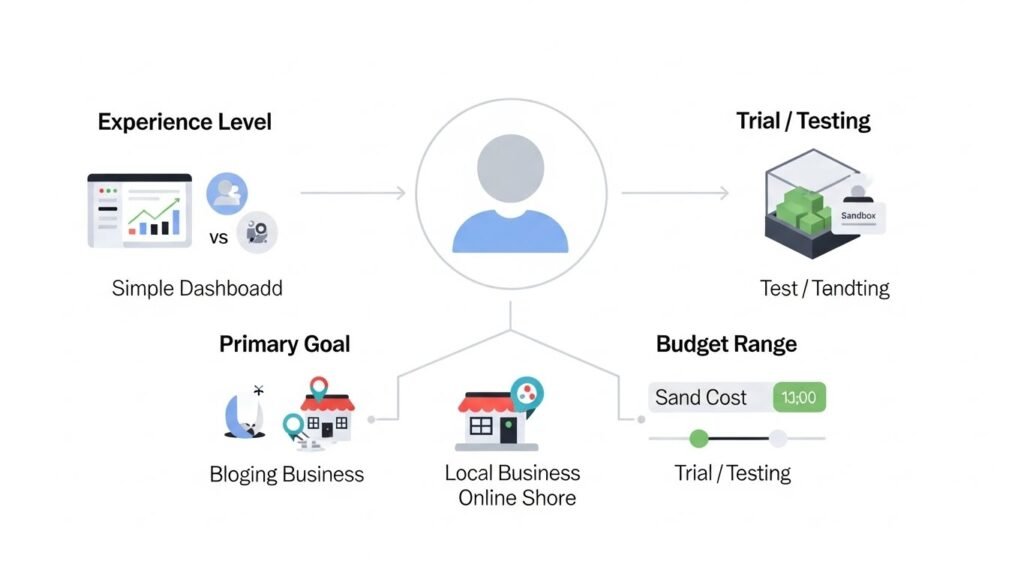
Rather than asking “Which SEO tool is the best?”, ask “Which SEO tool is best for me?”
Consider Your Experience Level
If you are new, avoid tools designed for agencies. Look for platforms that explain data clearly.
Define Your Primary Goal
Are you focused on blogging, affiliate marketing, or improving visibility using local SEO tools for businesses? Different tools shine in different areas.
Set a Realistic Budget
Expensive tools are not automatically better. Many beginners use affordable SEO tools successfully.
Try Before You Commit
Most SEO tools offer free trials or limited plans. Use them to understand the workflow before investing.
Common Beginner Mistakes When Using SEO Tools
Even the best SEO tool cannot guarantee results if used incorrectly.
- Relying only on keyword difficulty scores
- Ignoring search intent
- Over-optimizing content
- Chasing every SEO metric instead of focusing on users
SEO tools should guide decisions, not replace human judgment.
SEO Tools Are Helpers, Not Magic Solutions
One important truth beginners must understand is that SEO tools do not rank websites by themselves. They provide insights, data, and recommendations. Success comes from applying that information thoughtfully.
Using the right SEO tool consistently, learning from the data, and improving content over time delivers real results.
Frequently Asked Questions (FAQ)
What is the best SEO tool for beginners?
For beginners, tools with simple dashboards and clear explanations work best. Google Search Console combined with a beginner-friendly paid tool is often a strong starting point.
Can I do SEO without paid tools?
Yes, you can learn and apply basic SEO using free tools. However, paid SEO tools save time and provide deeper insights as your site grows.
How many SEO tools should I use?
Beginners should start with one or two tools. Using too many at once can create confusion and unnecessary complexity.
Are SEO tools accurate?
SEO tools provide estimates, not exact numbers. They are useful for trends and comparisons rather than precise measurements.
How long does it take to see results using SEO tools?
SEO is a long-term process. Even with the right tools, visible improvements usually take several weeks or months depending on competition and effort.