


How Dynamic Discounting Software Improves Cash Flow with Dynamic Discounting
Managing cash flow is one of the biggest challenges for modern businesses, especially when dealing with multiple suppliers, long payment cycles, and tight budgets. This is where dynamic discounting software comes into play. By using smart, flexible payment incentives, businesses can unlock better cash flow while helping suppliers get paid faster. In this article, we’ll explore how dynamic discounting works, why it matters, and how the right software can transform your finance operations.
Table of Contents
- Understanding the Basics of Dynamic Discounting
- What Is Dynamic Discounting Software?
- Why Cash Flow Matters More Than Ever
- How Dynamic Discounting Software Improves Cash Flow
- Benefits for Suppliers Using Dynamic Discounting
- Benefits for Buyers and Finance Teams
- Dynamic Discounting vs Other Finance Discounting Methods
- How to Implement Dynamic Discounting Software Successfully
- Common Challenges and How Software Solves Them
- The Future of Dynamic Discounting
- Frequently Asked Questions
Understanding the Basics of Dynamic Discounting
Before diving into software benefits, it’s important to understand what dynamic discounting actually means. At its core, dynamic discounting is a payment strategy where buyers offer suppliers early payment in exchange for a discount. Unlike fixed early-payment terms, the discount rate changes depending on how early the payment is made.
This flexible approach makes dynamic discounting more attractive than traditional early-payment models, as explained in GEP’s dynamic discounting guide.
Suppliers get access to cash when they need it, and buyers earn better returns on their excess liquidity.
How Dynamic Discounting Differs from Traditional Discounting
Traditional early-payment discounts usually follow rigid terms, such as “2% if paid within 10 days.” Dynamic discounting, on the other hand, allows suppliers to choose early payment at various points, each with a proportional discount.
This flexibility benefits both sides and creates a win-win scenario that static finance discounting models simply can’t offer.
What Is Dynamic Discounting Software?
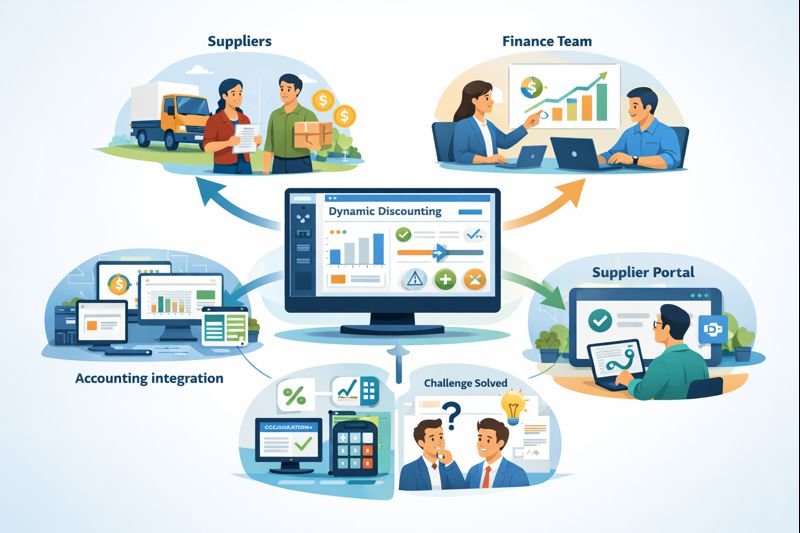
Dynamic discounting software is a digital platform that automates and manages the entire dynamic discounting process. It connects buyers and suppliers, calculates discounts in real time, and ensures payments are processed smoothly.
Instead of handling early-payment negotiations manually, finance teams can use software to set rules, monitor offers, and execute payments efficiently.
Key Features of Dynamic Discounting Software
- Automated discount calculations based on payment timing
- Real-time visibility into invoices and payment options
- Supplier self-service portals
- Integration with accounting and ERP systems
- Detailed reporting and cash flow analytics
Why Cash Flow Matters More Than Ever
Healthy cash flow keeps a business running smoothly. It allows companies to pay suppliers on time, invest in growth, and handle unexpected expenses. Even profitable businesses can struggle if their cash is tied up in unpaid invoices.
This is where dynamic discounting becomes a strategic finance tool rather than just a payment option.
The Hidden Cost of Slow Payments
Late or delayed payments strain supplier relationships and can disrupt supply chains. On the buyer’s side, holding cash without putting it to work means missed opportunities for returns.
Dynamic discounting software helps both parties address these issues in a practical, data-driven way.
How Dynamic Discounting Software Improves Cash Flow
Now let’s look at how dynamic discounting software directly improves cash flow for businesses.
1. Turns Excess Cash into a Strategic Asset
Many companies hold surplus cash to stay safe, but idle cash loses value over time when businesses fail to take advantage of software discount platforms that reduce operational costs. Dynamic discounting allows businesses to use that cash to earn guaranteed returns through invoice discounts.
Compared to low-interest savings or short-term investments, dynamic discounting often delivers higher, risk-free returns.
2. Improves Forecasting and Cash Visibility
With dynamic discounting software, finance teams get a clear view of upcoming invoices, payment options, and potential savings, especially when combined with accounting software that improves cash flow.
This transparency makes it easier to forecast cash needs and plan liquidity more accurately.
Better visibility leads to better decisions and fewer surprises.
3. Reduces Reliance on External Financing
When suppliers get paid early through dynamic discounting, they rely less on loans or factoring services. At the same time, buyers reduce the need for short-term borrowing because they manage payments more strategically.
This creates a healthier financial ecosystem for both sides.
Benefits for Suppliers Using Dynamic Discounting
Dynamic discounting isn’t just beneficial for buyers. Suppliers also gain meaningful advantages.
Faster Access to Cash
Suppliers can choose early payment when they need liquidity, without waiting for fixed terms. This flexibility helps them manage payroll, inventory, and operational expenses more confidently.
Lower Financing Costs
Compared to traditional financing or invoice factoring, dynamic discounting usually comes at a lower cost and works well alongside long-term software cost savings strategies. Suppliers trade a small discount for immediate cash, avoiding interest and fees.
Stronger Buyer Relationships
Offering dynamic discounting builds trust and collaboration. Suppliers appreciate buyers who provide flexible financial options rather than rigid payment schedules.
Benefits for Buyers and Finance Teams
From a buyer’s perspective, dynamic discounting software enhances overall finance discounting strategies.
Higher Returns with Low Risk
Early-payment discounts offer predictable, low-risk returns. Finance teams can treat dynamic discounting as part of their broader cash optimization strategy.
Operational Efficiency
Manual discount negotiations are time-consuming and error-prone. Dynamic discounting software automates these processes, freeing up finance teams to focus on higher-value tasks.
Scalable Across Global Operations
For companies working with international suppliers, dynamic discounting software scales easily across currencies, regions, and regulatory environments.
Dynamic Discounting vs Other Finance Discounting Methods
There are several finance discounting options available, but dynamic discounting stands out for its flexibility and simplicity.
Dynamic Discounting vs Factoring
Factoring involves selling invoices to a third party, often at a high cost. Dynamic discounting keeps the transaction between buyer and supplier, reducing fees and complexity.
Dynamic Discounting vs Static Early-Payment Discounts
Static discounts lack flexibility and often go unused. Dynamic discounting adapts to real-time cash needs, making it more practical and widely adopted.
How to Implement Dynamic Discounting Software Successfully
Adopting dynamic discounting software requires planning and clear communication.
Start with the Right Suppliers
Focus on suppliers who can benefit most from early payments. Their participation will drive early success and build momentum.
Align with Internal Finance Goals
Set clear objectives, whether it’s improving cash flow, earning better returns, or strengthening supplier relationships.
Integrate with Existing Systems
Choose software that integrates smoothly with your accounting and ERP systems to ensure accurate data and seamless workflows.
Common Challenges and How Software Solves Them
Some businesses hesitate to adopt dynamic discounting due to perceived complexity.
Managing Discount Calculations
Dynamic discounting software handles calculations automatically, eliminating manual errors and confusion.
Supplier Adoption
User-friendly supplier portals make it easy for suppliers to understand and participate in dynamic discounting programs.
The Future of Dynamic Discounting
As businesses continue to focus on liquidity and supply chain resilience, dynamic discounting is becoming a standard finance tool. Advances in automation, analytics, and integration are making dynamic discounting software more powerful and accessible.
Companies that adopt these tools early gain a competitive advantage through stronger cash flow and better supplier relationships.
Frequently Asked Questions
What is dynamic discounting software?
Dynamic discounting software is a digital platform that enables buyers to offer suppliers early payments in exchange for flexible, time-based discounts, helping both sides optimize cash flow.
How does dynamic discounting improve cash flow?
It allows buyers to earn returns on excess cash while suppliers receive faster payments, improving liquidity and reducing financing costs.
Is dynamic discounting better than traditional finance discounting?
Yes, dynamic discounting is more flexible and cost-effective than many traditional finance discounting methods like factoring or static early-payment discounts.
Can small businesses use dynamic discounting software?
Many platforms are scalable and suitable for small and mid-sized businesses, especially those looking to improve cash flow and supplier relationships.
Does dynamic discounting require changes to payment terms?
No, dynamic discounting works alongside existing payment terms, offering optional early-payment discounts without renegotiating contracts.