


Best Email Segmentation Tools for Smarter Email Marketing Campaigns
Email marketing still delivers one of the highest returns in digital marketing—but only when messages reach the right people. Sending the same email to everyone no longer works. That’s where the best email segmentation tools come in. These tools help businesses send relevant, personalized messages that actually get opened, read, and clicked.
Table of Contents
- What Is Email Segmentation and Why It Matters
- How Email Segmentation Tools Work
- What to Look for in the Best Email Segmentation Tools
- Best Email Segmentation Tools for Smarter Campaigns
- How AI Is Changing Email Segmentation
- Common Email Segmentation Mistakes to Avoid
- How to Choose the Right Tool for Your Business
- Frequently Asked Questions
In this guide, we’ll explore what email segmentation really means, why it matters, and which tools are best suited for smarter email marketing campaigns. Whether you’re running a small business, managing a growing brand, or handling large subscriber lists, this article will help you choose the right solution with confidence.
What Is Email Segmentation and Why It Matters
Email segmentation is the process of dividing your email list into smaller, targeted groups based on specific criteria, which becomes far more effective when supported by proper email list organization.
These criteria may include demographics, behavior, purchase history, location, or engagement level.
Instead of sending one generic message, segmentation allows you to send content that feels personal and timely. This approach improves open rates, click-through rates, and overall trust with your audience.
In modern email marketing, segmentation isn’t optional—it’s essential for delivering relevant experiences that align with email segmentation best practices.
Subscribers expect brands to understand their needs, and segmentation is the foundation of that understanding.
Key Benefits of Email Segmentation
- Higher email open and click rates
- Lower unsubscribe and spam complaint rates
- Better customer experience and trust
- More accurate campaign performance tracking
- Stronger return on investment (ROI)
How Email Segmentation Tools Work
Email segmentation tools collect and analyze subscriber data from different sources. This data may come from signup forms, website behavior, past email interactions, or CRM systems.
Once the data is collected, the tool allows you to create segments using filters and rules. For example, you might create a segment for users who clicked a link in the last 30 days or customers who purchased a specific product.
Advanced platforms now use artificial intelligence to automate this process. These tools analyze patterns and recommend segments you may not have considered, making campaigns smarter and more efficient.
What to Look for in the Best Email Segmentation Tools
Not all segmentation tools are created equal. Choosing the right one depends on your goals, list size, and marketing strategy. Here are the most important features to consider.
1. Flexible Segmentation Rules
The tool should allow you to segment based on multiple conditions, including behavior, engagement, demographics, and custom fields.
2. Real-Time Data Updates
Segments should update automatically as subscriber behavior changes. This ensures your campaigns always stay relevant.
3. Automation Capabilities
Automation allows segmented lists to trigger emails based on user actions, especially when combined with structured drip-based campaigns.
4. AI-Powered Insights
Many modern platforms include AI-driven suggestions that improve targeting accuracy and campaign performance.
5. Ease of Use
A clean, intuitive interface is crucial, especially if your team is not highly technical.
Best Email Segmentation Tools for Smarter Campaigns
Below are some of the best email segmentation tools available today. These platforms are trusted, widely used, and designed to support smarter email marketing strategies.
1. Mailchimp
Mailchimp is one of the most popular platforms in the email service market. It offers powerful segmentation features that work well for small to medium-sized businesses.
You can segment audiences based on engagement, purchase behavior, predicted demographics, and more. Mailchimp also uses AI to predict customer lifetime value and optimize targeting.
Its visual interface makes segmentation easy, even for beginners, while still offering advanced options for experienced marketers.
2. ActiveCampaign
ActiveCampaign is known for its advanced automation and deep segmentation capabilities, making it especially effective for teams managing complex B2B email strategies.
It allows you to build highly detailed segments using behavioral data, tags, and custom events.
This platform is ideal for businesses that want to combine segmentation with automation workflows. It integrates well with CRMs, eCommerce platforms, and analytics tools.
ActiveCampaign’s AI features help optimize send times and personalize content at scale.
3. Klaviyo
Klaviyo is a favorite among eCommerce brands. It specializes in behavior-based segmentation using purchase history, browsing behavior, and engagement data.
The platform updates segments in real time, allowing brands to respond quickly to customer actions. This makes it especially effective for product recommendations and lifecycle campaigns.
Klaviyo also supports AI-driven personalization, making campaigns more relevant and profitable.
4. HubSpot Email Marketing
HubSpot offers robust segmentation as part of its all-in-one marketing platform. It pulls data from CRM records, website interactions, and sales activity.
This makes it easy to create precise segments aligned with the customer journey. HubSpot is well-suited for B2B companies and teams that want marketing and sales alignment.
Its reporting tools also help you understand how each segment performs over time.
5. Sendinblue (Brevo)
Sendinblue, now known as Brevo, offers strong segmentation features at a competitive price. It supports demographic, behavioral, and transactional segmentation.
This platform is a good choice for small businesses looking for a reliable and scalable email service without unnecessary complexity.
Brevo also includes automation and SMS marketing, making it a versatile option.
How AI Is Changing Email Segmentation
Artificial intelligence is transforming how marketers approach segmentation. Traditional segmentation relied on manual rules, but AI analyzes massive datasets to uncover patterns humans might miss.
Some platforms now integrate an AI email generator that personalizes content for each segment automatically. These tools adjust subject lines, messaging, and timing based on user behavior.
AI-driven segmentation improves accuracy, saves time, and helps marketers deliver highly relevant campaigns at scale.
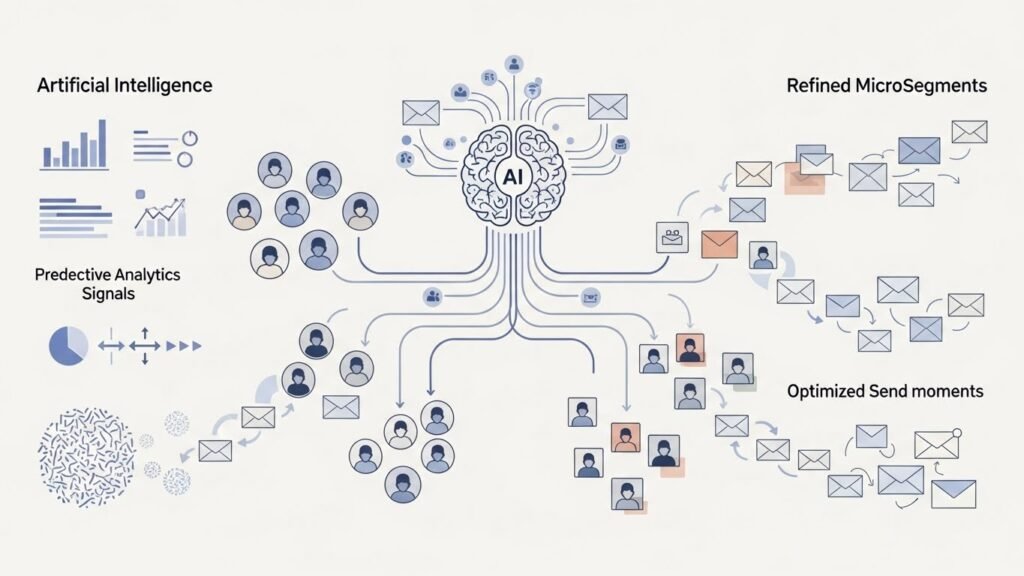
Practical AI Segmentation Use Cases
- Predicting which subscribers are most likely to convert
- Identifying inactive users before they unsubscribe
- Creating micro-segments for hyper-personalized campaigns
- Optimizing send times for each segment
Common Email Segmentation Mistakes to Avoid
Even with the best tools, segmentation can fail if done incorrectly. Here are common mistakes marketers should avoid.
Over-Segmentation
Creating too many segments can make campaigns difficult to manage and reduce effectiveness.
Using Outdated Data
If segments are not updated in real time, messages may become irrelevant or confusing.
Ignoring Engagement Signals
Open rates, clicks, and inactivity provide valuable insights that should always inform segmentation.
Focusing Only on Demographics
Behavioral data often provides stronger signals than age or location alone.
How to Choose the Right Tool for Your Business
The best email segmentation tools are those that align with your specific needs. Start by evaluating your list size, budget, and technical resources.
If you’re running an eCommerce store, behavior-based platforms may work best. If you’re managing leads and long sales cycles, CRM-based tools could be more effective.
Always consider ease of use, integration options, and scalability before making a decision.
Frequently Asked Questions
What are the best email segmentation tools for beginners?
Tools like Mailchimp and Brevo are beginner-friendly and offer strong segmentation features without a steep learning curve.
Can email segmentation improve conversion rates?
Yes. Segmented campaigns consistently outperform non-segmented ones by delivering more relevant messages to subscribers.
Do I need AI for email segmentation?
AI is not mandatory, but it enhances accuracy and efficiency, especially for large lists and complex campaigns.
How often should I update my email segments?
Ideally, segments should update in real time or at least before each campaign to reflect the latest subscriber behavior.
Is email segmentation suitable for small businesses?
Absolutely. Even simple segmentation can significantly improve results, regardless of business size.