
Photo Editing Tools in Photoshop That Help Create Stunning Photo Effects
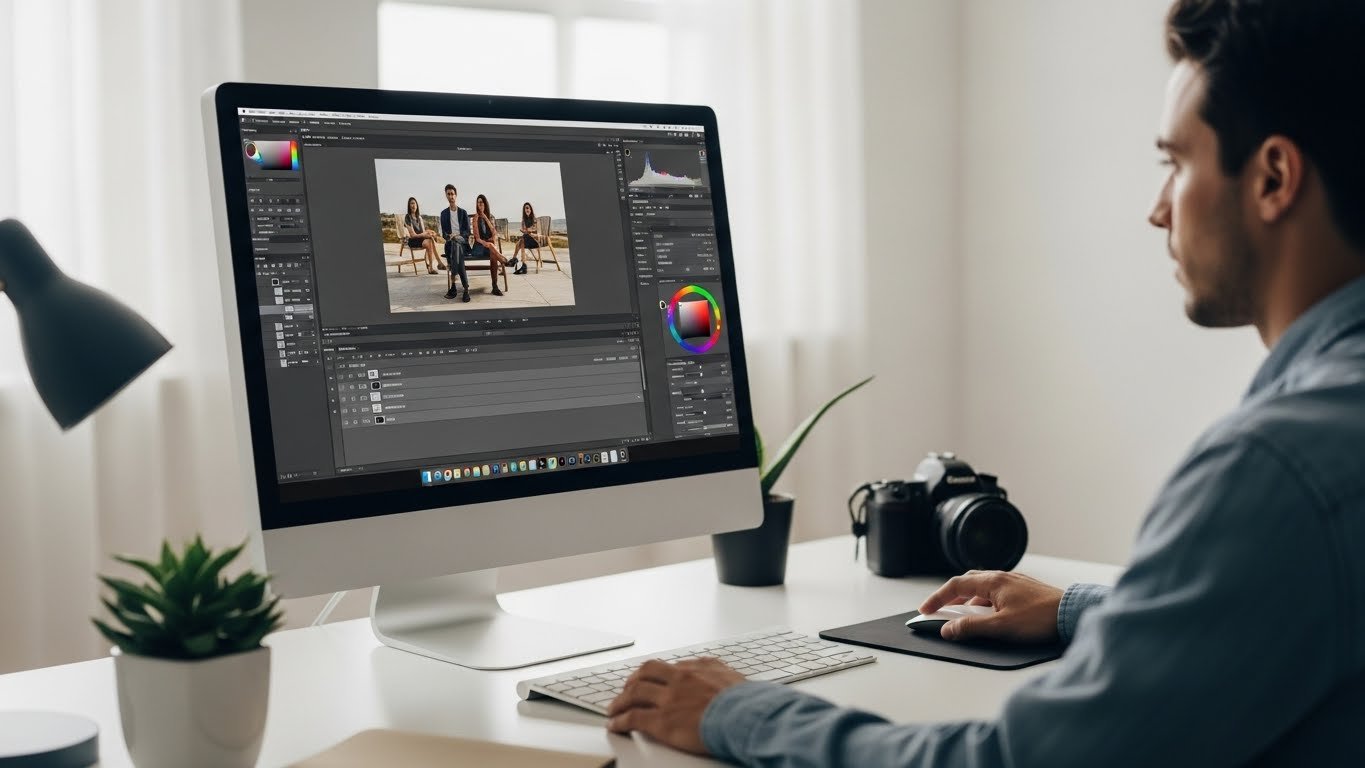
When it comes to professional image manipulation, photo editing tools in Photoshop remain the gold standard for photographers, designers, and digital artists worldwide. Whether you want subtle color corrections or dramatic visual transformations, Photoshop offers a deep toolkit that helps you create eye-catching and polished results. In this guide, we’ll explore the most important Photoshop tools that make stunning photo editing effects possible, even if you’re still learning the platform.
Table of Contents
- Why Photoshop Is Still the Industry Standard
- Understanding Non-Destructive Editing in Photoshop
- Core Photo Editing Tools in Photoshop
- Retouching Tools for Clean, Professional Results
- Color Grading Tools for Creative Effects
- Filters and Smart Objects
- Can Photoshop Be Used Online for Free?
- Best Practices for Stunning Photo Editing Effects
- FAQ: Photo Editing Tools in Photoshop
Instead of chasing shortcuts or quick tricks, understanding how these tools work together will give you long-term creative control. By the end of this article, you’ll clearly understand which tools matter most, how they’re used in real projects, and how they help produce professional-quality visuals.
Why Photoshop Is Still the Industry Standard
_toggle by multiple reasons_
Many photo editors appear every year, including browser-based options that promise Photoshop-like online editing capabilities.
Photoshop photo editing alternatives. While some are useful for quick edits, Photoshop remains unmatched for serious work. The reason is simple: depth, precision, and reliability.
Photoshop isn’t just about filters. It gives you pixel-level control, non-destructive editing, advanced masking, and professional color management. These features allow you to build custom Photoshop photo editing effects instead of relying on presets that everyone else uses.
Understanding Non-Destructive Editing in Photoshop
Before diving into individual tools, it’s important to understand Photoshop’s non-destructive workflow. This approach allows you to make changes without permanently altering the original image.
Non-destructive editing is powered by layers, adjustment layers, smart objects, and masks. Using these correctly ensures flexibility and protects your work as your edits evolve.
Layers Panel
The Layers panel is the foundation of all photo editing tools in Photoshop. Each edit can live on its own layer, allowing you to adjust, hide, or delete changes without affecting other parts of the image.
- Separate adjustments for better control
- Easy comparison of edits
- Professional, reversible workflow
Core Photo Editing Tools in Photoshop
Photoshop includes dozens of tools, but a few stand out as essential for creating high-impact photo editing effects. Let’s break them down clearly.
Adjustment Layers
Adjustment layers are among the most powerful photo editing tools in Photoshop. They allow you to change color, brightness, contrast, and tone without altering the original image.
Common adjustment layers include:
- Brightness/Contrast – Controls overall exposure
- Levels – Adjusts shadows, midtones, and highlights
- Curves – Offers precise tonal control
- Hue/Saturation – Fine-tunes colors
- Color Balance – Corrects color casts
These tools are responsible for many professional Photoshop photo editing techniques you see in magazines and advertisements.
Curves Tool for Advanced Lighting Effects
The Curves adjustment is one of the most feared but rewarding tools in Photoshop. It lets you reshape how light behaves across your image.
With Curves, you can:
- Create cinematic contrast
- Brighten shadows without blowing highlights
- Add dramatic mood lighting
Once mastered, Curves alone can elevate your photo editing to a professional level.
Selection Tools for Precision Editing
Selections allow you to isolate specific parts of an image. Photoshop offers multiple selection tools designed for different situations.
- Marquee Tool – Basic geometric selections
- Lasso Tool – Freehand selections
- Quick Selection Tool – Smart edge detection
- Object Selection Tool – AI-based subject detection
Accurate selections are essential for realistic Photoshop selection techniques, especially when working with people, products, or backgrounds.
Layer Masks
Layer masks work hand-in-hand with selections. Instead of erasing pixels, masks allow you to hide or reveal parts of a layer.
This technique is critical for:
- Blending images naturally
- Selective color grading
- Controlled exposure adjustments
Layer masks are a key reason Photoshop remains superior to many photoshop photo editing online free tools.
Retouching Tools for Clean, Professional Results
Retouching is where Photoshop truly shines. These tools help remove distractions and enhance details without making images look artificial.
Spot Healing Brush Tool
This tool quickly removes small imperfections like dust, blemishes, or scratches. Photoshop automatically samples nearby pixels to blend the fix naturally.
It’s ideal for fast cleanup tasks and basic skin retouching.
Healing Brush Tool
Unlike the Spot Healing Brush, the Healing Brush lets you choose a source area manually. This gives you more control and accuracy.
It’s commonly used in high-end portrait and product photography.
Clone Stamp Tool
The Clone Stamp copies pixels exactly from one area to another. While less automatic, it offers unmatched precision.
This tool is essential when working on complex textures or architectural images.
Color Grading Tools for Creative Effects
Color grading is a major part of modern visual storytelling, and mastering Photoshop color grading tools enhances every project.
Photoshop provides excellent tools to shape mood and emotion through color.
Color Lookup Tables (LUTs)
LUTs apply pre-defined color transformations to your image. They’re popular for cinematic looks and consistent branding.
You can also combine LUTs with opacity and masks for custom results.
Selective Color Adjustment
This tool lets you modify individual color ranges without affecting others. It’s perfect for fine-tuning skin tones or enhancing specific colors.
Gradient Maps
Gradient Maps remap tones to colors, creating stylized and dramatic effects. When used subtly, they add depth and uniqueness.
Filters and Smart Objects
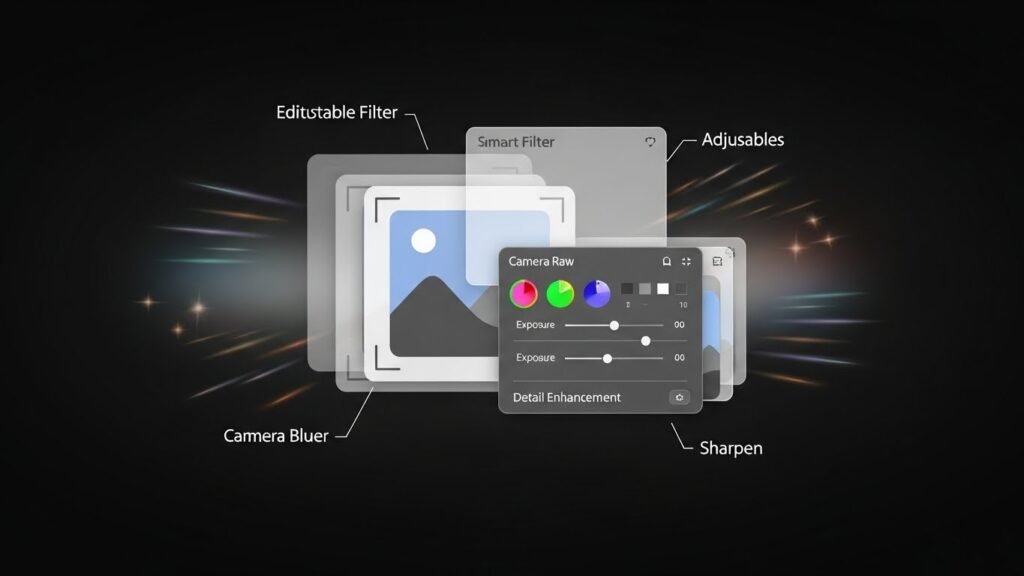
Filters add texture, blur, sharpening, and artistic effects. When applied to Smart Objects, filters become fully editable.
Camera Raw Filter
This powerful filter brings Lightroom-style controls directly into Photoshop. It’s excellent for:
- Global color correction
- Detail enhancement
- Professional color grading
Camera Raw alone can replace many external editing tools.
Blur and Sharpen Filters
Photoshop includes advanced blur options like Gaussian Blur, Lens Blur, and Motion Blur. These help simulate depth of field and movement.
Sharpening tools enhance clarity and detail when used carefully.
Can Photoshop Be Used Online for Free?
Many users search for photoshop photo editing online free options. Adobe does offer limited web-based versions and trials, but they lack the full power of desktop Photoshop.
While online editors are useful for basic tasks, they cannot match the advanced photo editing tools in Photoshop, especially for professional effects, masking, and color control.
Best Practices for Stunning Photo Editing Effects
Tools alone don’t create great results. How you use them matters even more.
- Edit with purpose, not excess
- Use adjustment layers instead of direct edits
- Zoom out often to evaluate the full image
- Maintain natural skin tones and textures
- Save layered files for future edits
FAQ: Photo Editing Tools in Photoshop
What are the most important photo editing tools in Photoshop?
The most important tools include adjustment layers, selection tools, layer masks, retouching tools, and Camera Raw. Together, they enable professional-level editing.
Can beginners use Photoshop for photo editing effects?
Yes. While Photoshop is powerful, beginners can start with basic adjustments and gradually learn advanced tools as their confidence grows.
Is Photoshop better than free online photo editors?
For professional results, yes. Free online editors are convenient but lack the depth, precision, and non-destructive workflow Photoshop offers.
Do I need plugins to create stunning effects in Photoshop?
No. Photoshop’s built-in tools are more than enough to create stunning photo editing effects when used correctly.
How long does it take to master Photoshop photo editing?
Basic skills can be learned in weeks, but mastering Photoshop is a continuous process that improves with practice and real projects.