

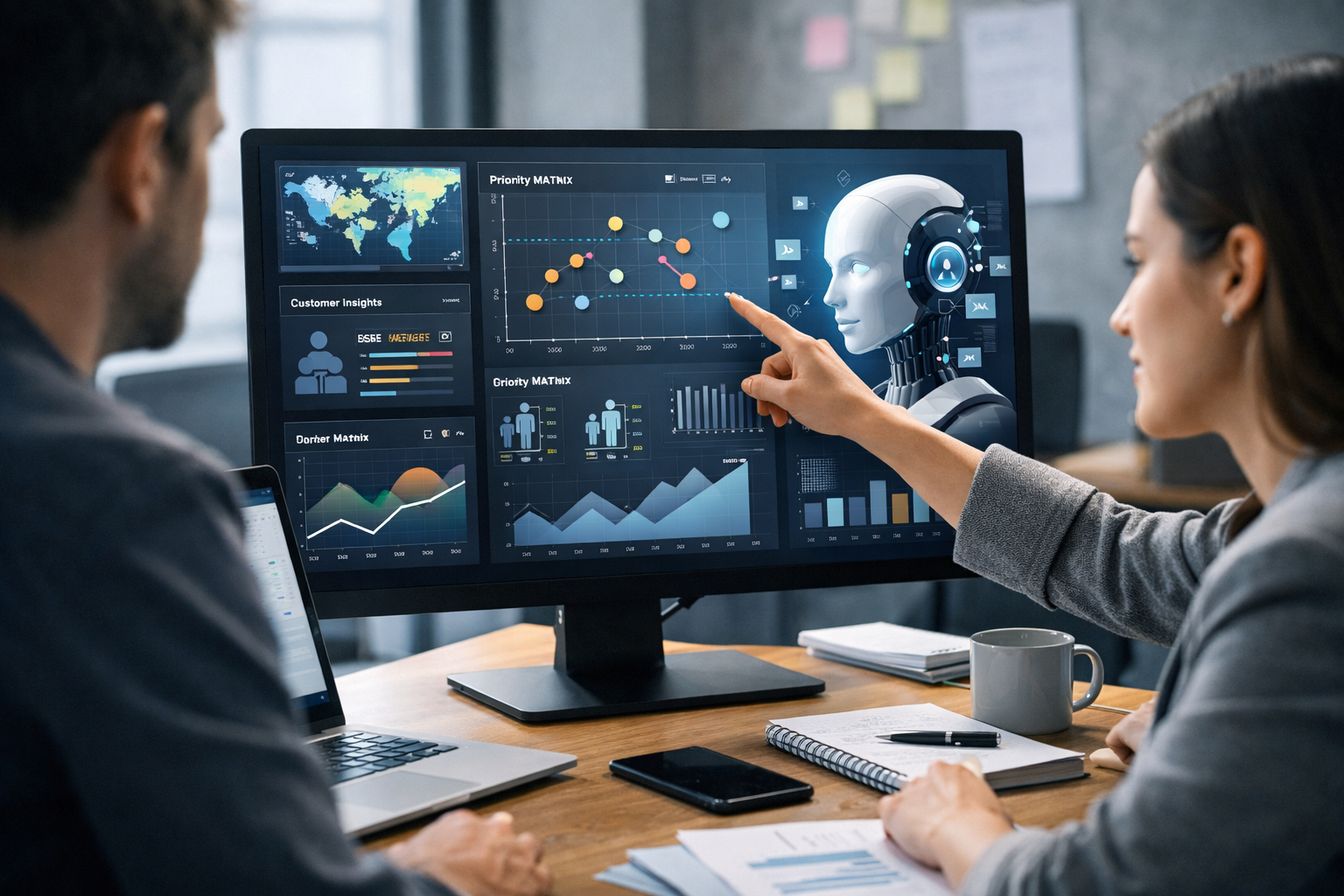
Best AI Tools for Product Managers to Boost Product Strategy and Execution
Modern product management is no longer just about intuition, roadmaps, and meetings. Today, the most successful teams are quietly powered by AI tools for product managers—an approach widely discussed in research on how artificial intelligence in product strategy is transforming execution across industries.. If you’re juggling user feedback, stakeholder expectations, feature prioritization, and tight deadlines, AI is no longer optional—it’s a competitive advantage.
Table of Contents
- Why AI Matters for Product Managers Today
- How AI Is Changing the Role of the Product Manager
- Categories of AI Tools for Product Managers
- Best AI Tools for Product Managers in 2026
- AI Tools and the Product Manager Skill Set
- How to Choose the Right AI Tools for Your Product Team
- Ethics and Trust in AI-Powered Product Management
- The Future of AI for Product Managers
- Frequently Asked Questions
In this guide, we’ll explore the best AI tools product managers actually use in real-world scenarios, building on broader insights into how modern teams adopt AI-powered software tools effectively.. We’ll look at how these tools support strategy, discovery, delivery, and growth—without hype or vague promises. Whether you’re an aspiring AI product manager or an experienced PM looking to level up, this article will give you a clear, practical roadmap.
Why AI Matters for Product Managers Today
Product managers sit at the intersection of business, technology, and users. That role comes with constant pressure: limited time, incomplete data, and high expectations. AI helps reduce this pressure by automating repetitive work and uncovering insights humans might miss, a benefit also seen in how generative AI tools streamline content creation and analysis workflows.
Instead of spending hours sorting feedback, writing specs, or analyzing metrics, AI tools allow product managers to focus on what really matters: strategy, vision, and impact.
- Faster decision-making with data-backed insights
- Improved prioritization and roadmap planning
- Better understanding of users at scale
- Clearer communication with stakeholders
How AI Is Changing the Role of the Product Manager
The rise of AI doesn’t replace product managers—it reshapes their role. PMs are becoming more strategic, more analytical, and more outcome-focused.
Today’s ai product manager is expected to understand how AI works, where it adds value, and how to use AI-powered tools responsibly. This shift is also driving interest in professional learning paths like ai product manager certificati programs, which focus on AI-driven decision-making and product leadership.
Categories of AI Tools for Product Managers
Before diving into specific tools, it helps to understand how AI tools are typically used in product management. Most fall into a few practical categories.
Strategy and Planning
These tools help with market research, opportunity sizing, roadmap planning, and competitive analysis.
User Research and Feedback Analysis
AI shines at analyzing large volumes of qualitative data, such as surveys, reviews, and support tickets.
Execution and Delivery
From writing PRDs to tracking progress, AI tools streamline day-to-day product operations.
Analytics and Decision Support
These tools help product managers interpret metrics, identify trends, and predict outcomes.
Best AI Tools for Product Managers in 2026
Below are some of the most practical and widely adopted ai tools for product manage tasks today. Each tool solves real problems product managers face.
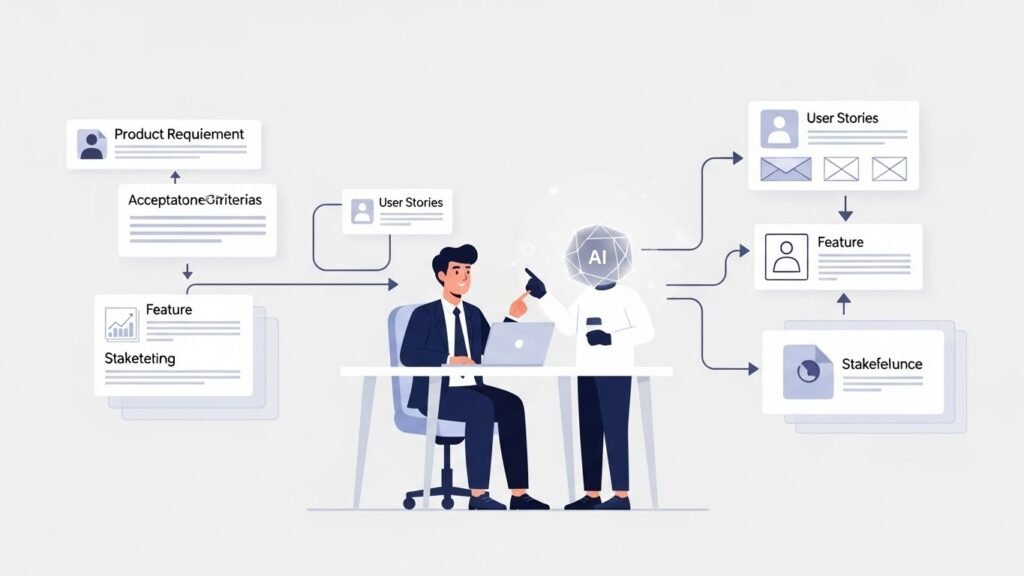
ChatGPT for Product Strategy and Documentation
ChatGPT has become a daily companion for many product managers. It helps draft PRDs, user stories, acceptance criteria, release notes, and even strategic narratives.
Used thoughtfully, it doesn’t replace thinking—it accelerates it. Product managers often use ChatGPT to clarify ideas, explore trade-offs, and prepare stakeholder communications.
- Draft and refine product requirement documents
- Generate user stories and edge cases
- Brainstorm feature ideas and risks
Productboard AI for Roadmapping and Prioritization
Productboard’s AI features help product managers turn user feedback into actionable insights. The tool automatically clusters feedback, highlights trends, and connects insights directly to roadmap decisions.
This is especially valuable when dealing with thousands of feedback items across multiple channels.
Amplitude AI for Product Analytics
Amplitude uses AI to surface insights that might otherwise go unnoticed. Instead of manually digging through dashboards, product managers can ask questions and receive guided explanations.
This shortens the gap between data and decision, making analytics more accessible for non-technical PMs.
Notion AI for Product Knowledge Management
Notion AI helps product managers organize thinking, summarize research, and maintain a single source of truth for product knowledge.
It’s particularly useful for distributed teams that need clarity and alignment across time zones.
Jira AI for Smarter Delivery Tracking
Jira’s AI-powered features help identify bottlenecks, predict delivery risks, and summarize sprint progress.
For product managers working closely with engineering teams, this provides better visibility without micromanagement.
Hotjar AI for User Behavior Insights
Hotjar combines behavioral analytics with AI-driven summaries. Instead of watching dozens of session recordings, PMs can quickly understand patterns and usability issues.
This helps bridge the gap between qualitative insights and quantitative metrics.
AI Tools and the Product Manager Skill Set
Using AI tools effectively requires more than clicking buttons, especially as teams learn to apply structured AI workflows that support consistent, high-quality decision-making. Product managers need to develop new skills alongside these tools.
- Asking the right questions of data
- Understanding AI limitations and bias
- Interpreting AI-generated insights critically
- Aligning AI outputs with business goals
This is why many professionals are now exploring ai product manager certificati programs. These certifications don’t just teach tools—they focus on mindset, ethics, and strategic thinking in an AI-driven environment.
How to Choose the Right AI Tools for Your Product Team
Not every AI tool is right for every product or organization. The best approach is to start with your biggest pain points.
Ask the Right Questions
- Where do we spend the most manual effort?
- What decisions feel slow or unclear?
- Which insights are hardest to extract?
Start Small and Iterate
Introduce one AI tool at a time, measure its impact, and refine how your team uses it. AI delivers the most value when it’s embedded into daily workflows, not treated as a novelty.
Ethics and Trust in AI-Powered Product Management
Trust is critical in product management. AI tools should support responsible decision-making, not replace accountability.
Product managers must ensure that AI-driven insights are explainable, inclusive, and aligned with user needs. Transparency with stakeholders and users builds long-term confidence in AI-assisted products.
The Future of AI for Product Managers
AI tools will continue to evolve, becoming more predictive, more contextual, and more integrated across the product lifecycle.
In the future, AI won’t just assist with tasks—it will actively support scenario planning, opportunity discovery, and continuous optimization. Product managers who embrace AI today will be better positioned to lead tomorrow.
Frequently Asked Questions
What are the best AI tools for product managers?
The best tools include ChatGPT for documentation and strategy, Productboard for feedback-driven roadmaps, Amplitude for analytics, and Notion AI for knowledge management. The right choice depends on your workflow and team needs.
Do product managers need to learn AI?
Yes. While deep technical knowledge isn’t required, understanding how AI works and how to use AI tools effectively is becoming an essential product management skill.
Is an AI product manager certification worth it?
An ai product manager certificati can be valuable if it focuses on practical application, ethics, and strategy—not just theory. It’s especially useful for PMs working on AI-driven products.
Can AI replace product managers?
No. AI supports product managers by handling repetitive tasks and analysis, but human judgment, empathy, and strategic thinking remain irreplaceable.
How should beginners start using AI tools in product management?
Start with simple tools like ChatGPT or Notion AI. Use them for documentation, research summaries, and idea exploration before moving to more advanced analytics or prioritization tools.